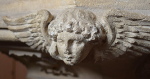
St Andrew, Chelmondiston

www.suffolkchurches.co.uk - a journey through the churches of Suffolk
|
St Andrew, Chelmondiston |
|
|
||
www.suffolkchurches.co.uk - a journey through the churches of Suffolk |
||


Follow these journeys as they happen at Last Of England Twitter.
| Pin Mill is a favourite haunt of
fashionable visitors to Suffolk as well as Ipswichians
out for a treat. You can sit in the Butt and Oyster pub
nursing a gin and tonic, looking out over the yachts and
pretending you own one. In earlier times, Arthur Ransome
set his book We Didn't Mean To Go To Sea here.
Chelmondiston is the village above Pin Mill, a busy,
pleasant place with a church which is remarkable in its
way. Like several along this coast it was derelict by the
mid-19th Century, and was completely rebuilt in the 1860s
by Edward Hakewill, a ponderous architect who seems to
have been fond of low, gloomy north aisles. He built them
at nearby Brantham, Rushmere and Shottisham, and he
included one here, too. However, one night in late 1944 a
German V2 rocket took a particular fancy to Hakewill's
work, and came in for a closer look. The little church
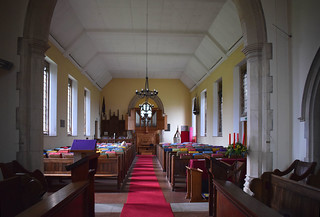
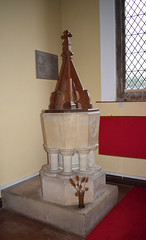
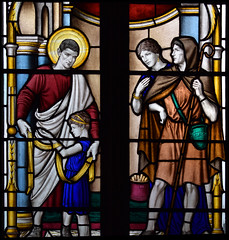
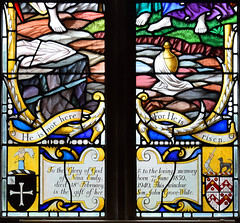
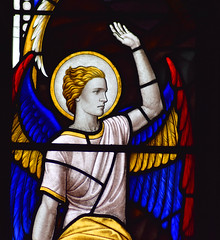
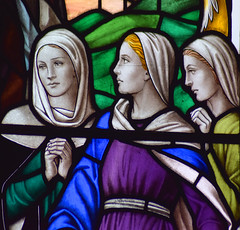
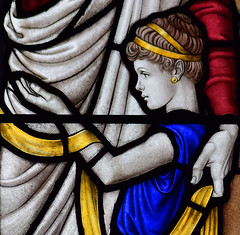
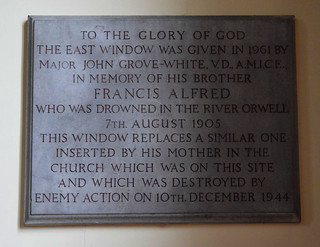
was almost completely destroyed. Perhaps because we are so close to other villages and their churches here, rebuilding does not seem to have been a priority, and it was not until 1951 that Basil Hatcher was given the commission to provide a replacement. You might imagine that at such a date he would have designed something in a jaunty Festival of Britain style, but this did not happen. Later in the decade his would be the most significant post-war Anglican church in Suffolk, St Francis on the Chantry Estate in Ipswich, but here at Chelmondiston he built a simple essay in Suffolk Perpendicular which is very successful in its way. However, stepping inside is to enter a feel of the Fifties. Almost everything is new, but there are survivals from Hakewill's church and even from the church before Hakewill. The font in the 14th Century style is Hakewill's, and several memorials also survived the explosion. An unlikely survival perhaps is the 18th Century hour glass, installed to make sure that ministers' sermons did not short change the congregation. But the most memorable work of all here is the glass in the chancel. It is by Francis Skeat, and Chelmondiston is one of just two churches in Suffolk with glass by this otherwise prolific artist (the other is a few miles off at East Bergholt). The east window depicts the Crucifixion, flanked by two separate scenes of Christ as the Good Shepherd. Interestingly, in both scenes it is the Risen Christ we see. On the south side of the chancel are scenes of the Summoning of St Andrew by Christ, St Luke healing a child, and the Three Marys at the Empty Tomb. At the back of the church a memorial plaque tells us that the east window was given in 1961 by Major John Grove-White in memory of his brother Alfred who was drowned in the River Orwell 7th August 1905. This window replaces a similar one inserted by his mother in the church which was on this site and which was destroyed by enemy action on 10th December 1944. The glass on the south side of the chancel remembers other members of the Grove-White family. Meanwhile, there is a pleasing abstract piece of 2004 on the south side of the nave. The inscription below tells us that Anthony de Jong Cleyndert made this in memory of his father Jacob. |
Simon Knott, January 2021
Follow these journeys as they happen at Last Of England Twitter.









|
||||||||||||||||||||||||||||||||||||||||||||||||||||||