| |
|
 |
|
Here we are half a dozen
miles from the pleasant town of Bury St
Edmunds, and Chevington is one of those
fat, comfortable villages, of which west
Suffolk has so many. The church is away
from the centre of the village at the end
of a long lane which sets off in the
direction of Ickworth House. All Saints
is not a well-known church, but in its
way it is remarkable, a building that it
is as beautiful as it is interesting.
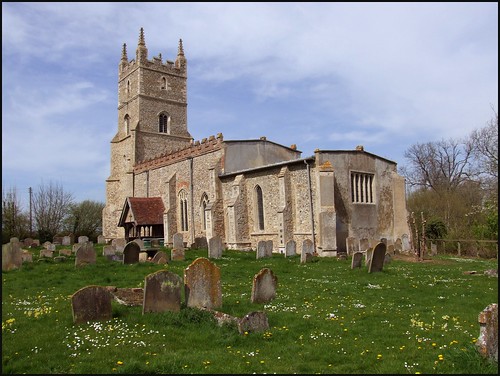
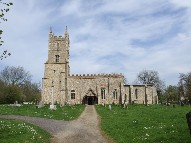
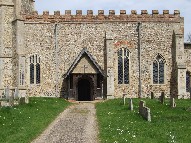
This is a large church, in a wide, trim
graveyard, and rather fortress-like with
its red brick battlements. It imposes
itself on us in a way that is less
familiar in west Suffolk than we might
find in the grand, remote churches of
Norfolk, say. The castellated south side
appears stark, though not unpleasing. The
spirelets on the 15th century tower were
later additions, intended to provide a
'view' from Ickworth House, as at Westley
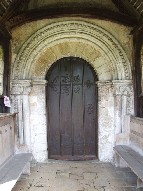
St Mary. The true age of the nave is
obvious from the south doorway, which is
a grand Norman affair. It was obviously
considerably heightened in the late
medieval period. Was an aisle intended,
and even a clerestory? The chancel
appears low and functional beside it. |
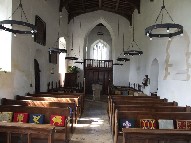
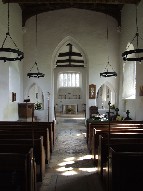
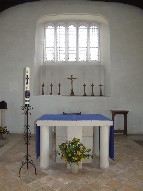
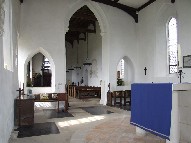
You step into the surprise of
whiteness and light. Everything is perfectly
arranged, everything engages the eye and lifts
the spirit. The use of whiteness and space
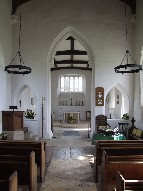
creating a sense of the numinous. The chancel was
reordered in the 1980s, and no punches were
pulled in creating a fitting and purposeful space
for late 20th century worship. It is reminiscent
of many Catholic churches of the period in the
way it has dispensed with clutter and created a
sense of openness, and although this is a CofE
parish church, the spirit of Vatican II has been
warmly embraced. The whole piece feels
devotional, and prayerful.
Ironically, this is one of the few Suffolk
churches that was not thoroughly restored in the
second half of the nineteenth century. This is
due to an accident of history. A restoration here
in the 1820s took away the roodloft stairs, as
well as the remains of the rood screen, and was
therefore probably structurally necessary. A
major restoration then took place in 1910, at
which time a heavy wooden screen was put across
the chancel arch. This, thank goodness, has now
been removed, and one of the most delightful
chancel interiors in the county is revealed. The
floor had been lowered at the end of the 17th
century, and now a horseshoe of bricks was built
up as a communion platform.
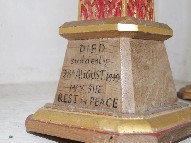
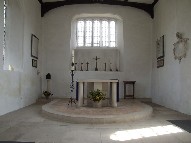
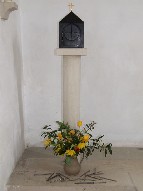
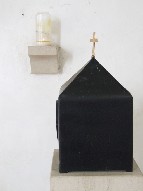
A new altar was put in place, along with a
reservation pillar, affirming the Anglo-catholic
tradition of this parish. The east window, an
unusual date of of 1697, contributes to this
sense of simplicity and lightness. The lightness
of this space is enhanced by the openings either
side of the chancel arch. Something similar
exists a few miles off at Gedding. These would
once have had altars in front of them, giving a
view of the high altar. They date from the 13th
century, so would have pre-dated any rood system.
You can still find a piscina beside the southern
one.
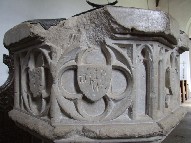
This quiet spirituality has a
dramatic counterpoint, however. In common with
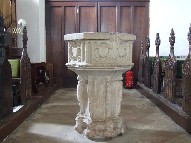
several churches around here, the font shows
signs of iconoclastic attack. The panel on the
west side has had a great chunk taken out of it,
probably with an axe, and crude graffiti in a
17th century hand has been scrawled in one of the
shields. As the font carries no religious
imagery, the iconoclasm must have been intended
as an attack on the idea of infant baptism
itself.
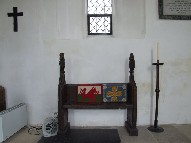
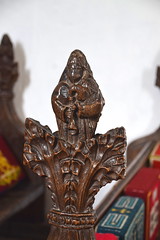
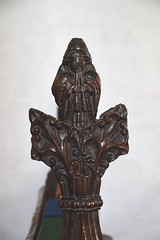
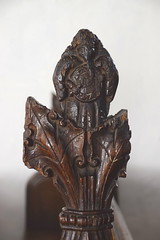
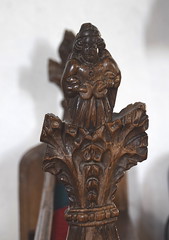
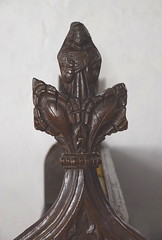
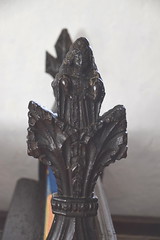
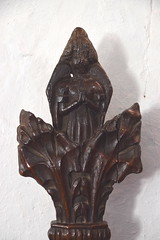
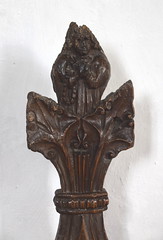
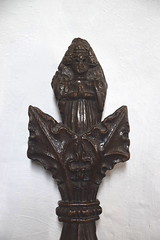
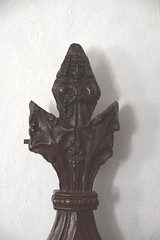
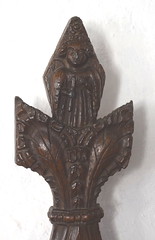
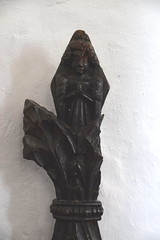
The best is yet to come, for as you
return westwards you will find the surprise of a
range of 15th Century bench ends, depicting
musicians and other figures, and it is hard not
to think they may have been based on the late
medieval inhabitants of this lovely village. The
best of the musicians plays the bagpipes, and
others accompany him on the double shawm, the
lute, the tabor and the nakers. Other figures
pray with rosary beads, and one holds what
appears to be a nosegay on a stick. Their quality
may be a result of this church being in the
ownership of Bury Abbey until the Reformation.
The
17th Century has left its treasures as well.
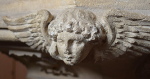
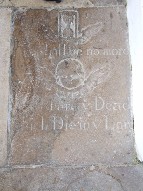
Under the chancel arch are two similar ledger
stones: a winged hourglass and a cherub flutter
over the inscriptions Sin shall be no more:
Blessed are ye Dead which Die in the Lord. There
is a quiet simplicity to them, fitting in this
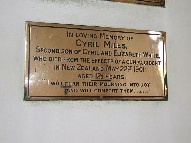
church, and the theme is continued by a sequence
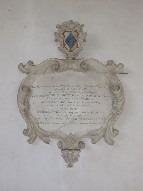
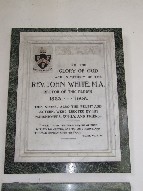
of simple memorials on the chancel walls: in
1901, Cyril Miles died aged twelve and a half from
the effects of a gun accident in New Zealand.
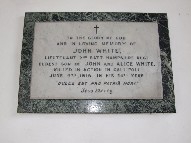
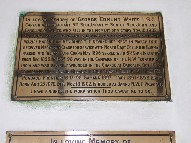
The
following year, the Rector's son George White
fell in the moment of victory while gallantly
leading the storming party at Gumatti Fort in the
Waziri Expedition. In 1915, his nephew John
White, son of the next Rector, was killed at
Gallipolli at the age of 24, three illustrations
that the early years of the last century were
also dramatic in their effect upon a rural East
Anglian parish.
|
|
|