| |
|
 |
|
The great medieval churches
of the north Suffolk coast are in various
states of survival, according to the
fortunes of history. Southwold is
the complete municipal church, wonderful
in nearly every respect. Blythburgh
has been pulled back from the brink, a
stunningly beautiful space fitted
perfectly for the spiritual aesthetics of
contemporary Anglicanism. Walberswick
and Covehithe complete this quartet of
huge churches, but you need to visit the
first two to fully appreciate what was
once here, and at Walberswick. There was
a fifth great church at Easton
Bavents, but that is now
entirely lost to the sea. For,
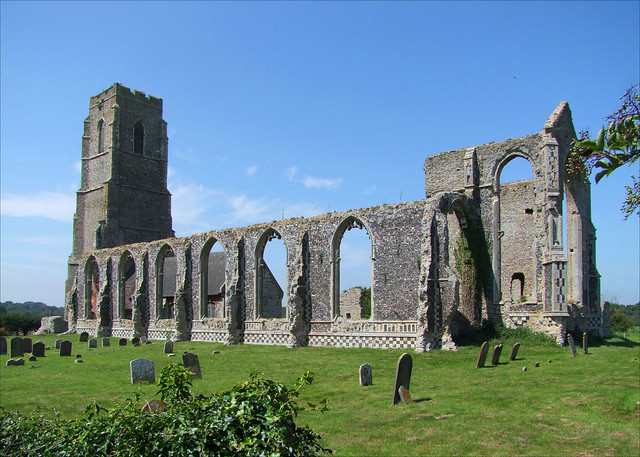
like Walberswick, St Andrew at Covehithe
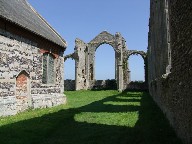
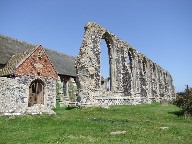
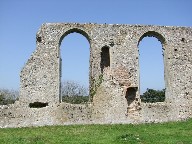
is a ruin now, and all that remains is a
vast curtain of walling, which is almost
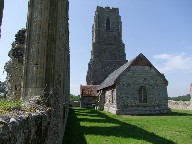
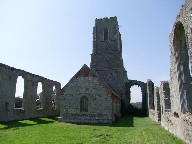
complete. It dwarfs a tiny 17th Century
church built against the tower within the
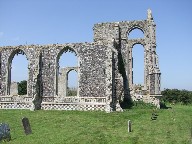
shell. The eastern end of the ruin is
especially impressive, with the rood loft
stairs in the north wall still
accessible, and what was clearly a
vaulted crypt in the chancel.
|
And
yet, you need to remind yourself that this is not
an ancient ruin. This church was rebuilt in the
15th Century at about the same time as Southwold and Blythburgh. As at
Blythburgh, an earlier tower was incorporated.
This tower still survives today. But the rest of
the church was derelicted by the local people in
1672, less than two hundred years after it had
been built. This was not out of any malicious
intent; rather, the upkeep of such a great church
placed too great a burden on such a tiny village
at a time when public worship was a low-key and
rather sober affair. It was a question of
priorities, and a reminder that these great
churches were not designed for the congregational
worship they came to host after the Reformation.
So the parish got permission to remove the roof,
and then built the much smaller church against
the west tower. The same thing happened at Walberswick.
The
tower is a very fine one, and was once an
important landmark for ships at sea. Trinity
House once ensured its survival, but nowadays the
tower is in the care of the Churches Conservation
Trust, as are the ruins. Thirty years before the
roof was taken off, the iconoclast William
Dowsing had visited the great church, on which
occasion he ordered the destruction of about 200
images in stained glass. As in nearly every case,
Dowsing would have been welcomed here with open
arms by the churchwardens, who were certainly
puritans themselves. When the new church was
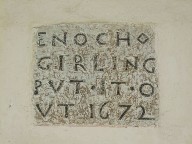
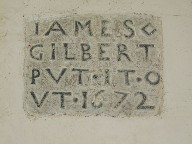
built, two inscriptions were placed in the north
and south walls to remember the churchwardens
Enoch Girling and James Gilbert, who put it
out, that is to say the contract for the
work.
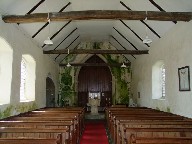
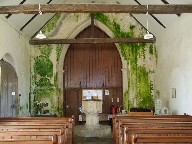
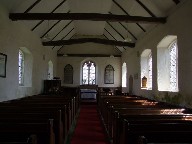
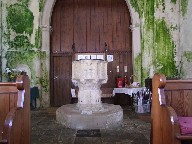
Inside the tiny new church, which is
thatched, the original font is preserved. From a
medeival historian's point of view, there isn't a
lot to see in here, but it is a rather lovely
rural space with a sense of the history of its
community. The green west wall is rather
alarming, although characterful. Of more interest
perhaps is the external east wall, where you can
find numerous lumps of masonry built into the
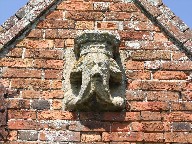
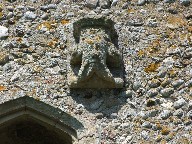
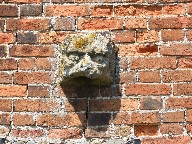
base from the old church, including some
decorated carvings, perhaps from shrines,
piscinas and sedilias, as well as corbels which
must once have peered down from a great height in
the nave. These are rather mournful, if dwelt
upon.
Much better to wander about in the
wild shell which surrounds it. In high summer the
grass is bleached, and the structure becomes the
bones of a great prehistoric animal foundering in
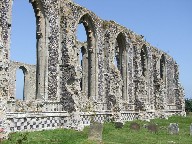
a desert. The sunlight creates a silhouette of
the ruin, lending a drama to the great rows of
arched windows which run down the east and south
walls of the church. In late afternoon, the west
window of the former north aisle throws its shape
the length of the former nave. Or come here on a
wild day in autumn or winter, and there is a
lonely bleakness to these ruins which are a more
primitive affair than the similarly preserved
ruins of the Abbey at
Bury, or of Stanton St
John.
Covehithe itself is
a lonely place, on the way to or from
nowhere, and it contrasts greatly with
busy Southwold
and genteel Blythburgh.
There is a farmhouse, and then houses to
the east which have been abandoned now.
Holiday-makers still come to visit the
beach, but the path which runs to it past
the church has now been washed away by
storms, and it isn't possible to reach
the beach that way anymore.
St Andrew remains
for now as a sentinel to the Suffolk
which thrived in the late medieval
period, and as a memory to the decline in
that prosperity in the centuries since.
Enjoy it while you can, because in fifty
years time this church will not be here.
By then, the sea will have carried it
away, to join its former Easton
Bavents neighbour to the
south.
|
|
 |
|
|
|