St Peter and St Paul, Felixstowe

www.suffolkchurches.co.uk - a journey through the churches of Suffolk
|
St Peter and St Paul, Felixstowe |
|
|
||
www.suffolkchurches.co.uk - a journey through the churches of Suffolk |
||
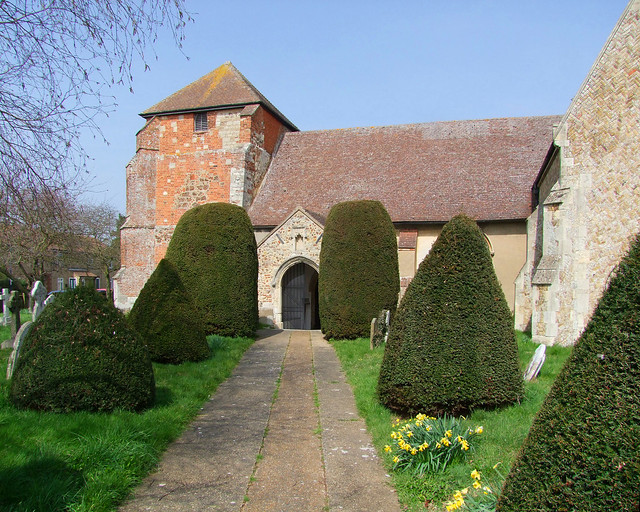
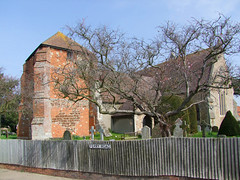
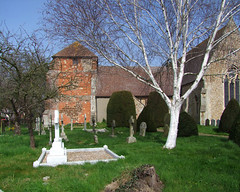
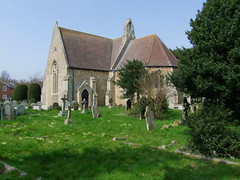
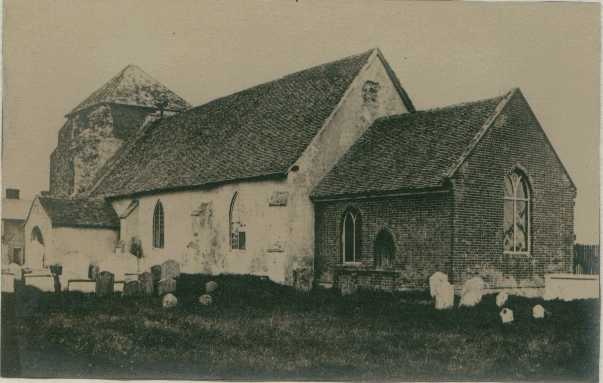
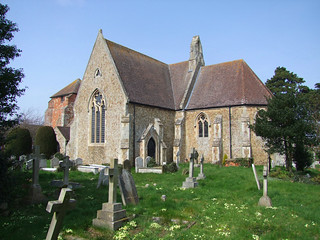
A medieval time traveller would be even more surprised to see that this church has been almost completely rebuilt since its Catholic days, in a grand and fascinating manner. The transformation was carried out by Edwards and Roberts of Dundee in 1872. The lower part of the tower survives, the oldest structure in the parish by hundreds of years. The upper part, in common with many in this part of Suffolk, succumbed to the coastal weather in the late 18th century, and is a capped twin to that at Bawdsey, two miles or so across the Deben estuary. The ruinous building was patched up in an economical fashion, including the construction of the rather curious red brick chancel shown in mid-19th Century photographs. It is an odd date to build a chancel. Perhaps it was used as a school room. The two photographs below are taken more or less from the same spot and show the church before and after its restoration.
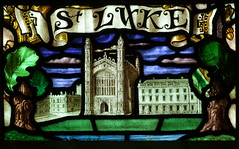
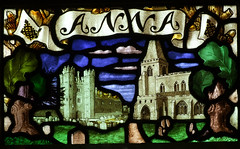
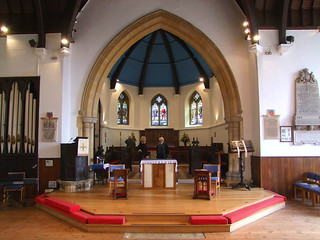
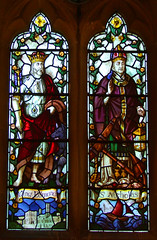
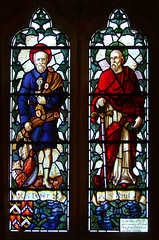
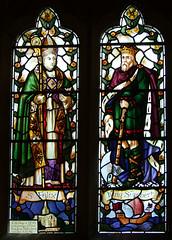
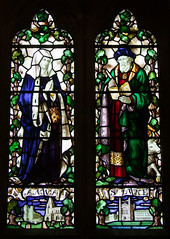
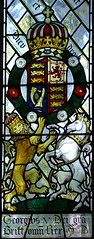
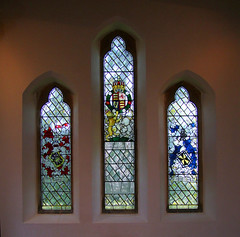
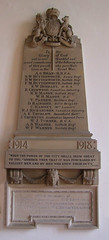
So it was then, in the 1870s, that a substantial rebuilding took place. The chancel was taken down, and transepts and a new chancel added, more than doubling the length of the church. Much was retained in the superstructure of the nave, but the roof was renewed, as were all the windows. The crossing is very high, much higher than the nave, and outside on its gable sits a fine sanctus bell turret. I found this intriguing, since it appears to be medieval at heart (despite now incorporating a chimney) but as you can see the photograph of the church before its restoration does not show it. I wonder where it came from. The parish war memorial is one of those grand ones designed by Henry Munro Cautley for about half a dozen churches in the Ipswich area. Even so, it doesn't feature as many names as you might expect for a port of this size. This is because by the end of the 19th Century most Felixstowe people were living in the new parish of St John the Baptist, carved out of this parish in the 1890s and served by Arthur Blomfield's magnificent red brick twilight of St John's. By the time of the Second World War, St Peter and St Paul parish was even smaller, the town centre end of the parish forming the new parish of St Andrew, served by Mason and Erith's remarkable concrete church of St Andrew. There is a George V Royal arms in glass by FC Eden in the north transept. The windows up in the apse-like sanctuary are jewel-like in this setting, but unfortunately no record survives of which workshop made them. They have something of Powell & Son about them. They show a combination of the East Anglian Saints Felix and Edmund, as well as that Saint associated with the sea that are so familiar in this part of Suffolk, St Nicholas. Anna stands beside St Luke with his story about her at the presentation in the temple. The church patrons St Peter and St Paul and King Sigebert of East Anglia complete the set. Below Felix is Norwich Cathedral, and under Edmund is Bury Abbey, neither place ever visited by them - or, at least, not while alive. More surreally, St Luke is paired with Kings College, Cambridge, and Anna with Hadleigh Deanery and church. Presumably these are places of significance to the Cobbold family who gave the glass.
Simon Knott, April 2015
|
Amazon commission helps cover the running costs of this site