St Lawrence, Ilketshall St Lawrence

www.suffolkchurches.co.uk - a journey through the churches of Suffolk
|
St Lawrence, Ilketshall St Lawrence |
|
|
||
www.suffolkchurches.co.uk - a journey through the churches of Suffolk |
||


Follow these journeys as they happen at Last Of England Twitter.
| When I
first visited this church in 1998 it was being readied
for a harvest festival. At the time I said that that they
had made it look very nice inside I supposed, but in all
honesty this was a rather shabby building. The winds that
blow from the Waveney had dug their damp fingers into the
plaster, the whitewash was peeling, the walls were
bulging. I wondered what I might find if I came back in
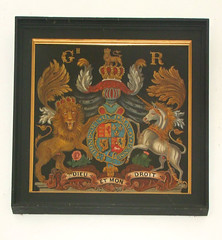
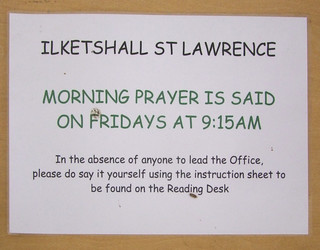
twenty years time? That twenty years has more than passed, but I have visited this lovely little church on several occasions since, and I can assure you that it has been taken in hand and cared for lovingly. Seen from the road, St Lawrence is a small, fairly plain church. From the north across the fields however it rides its ridge dramatically. The pines and cottages create a sense of an ancient hilltop community. It was almost certainly the site of a Roman station protecting adjacent Stone Street. You enter the churchyard through a pretty thatched lychgate, the south side of the church spreading out before you. The 15th century tower is stark, its buttresses to the west seeming overlarge, the brick parapet serving to accentuate its trimness. Simon Cotton found two bequests to the tower in the 1470s, and a further to its reparation in 1503, dates which probably give an idea of the campaign that built it. Despite the difficult times this church has gone through, today you step into the delight of a crisp, beautiful building, thoroughly rustic in character, but obviously well-cared for and loved. I hardly recognise it in contrast with the building I visited two decades previously, for, while I had found its shabbiness endearing, it had seemed dangerously close to some kind of abandonment. Nothing could be further from the truth today. Pride of place has been given to the royal arms of George II, restored and put in place above the tower arch. The Victorian tiles of the floor are vivid, as if dust would not dare to settle, and the clear light from the tracery of the east window fills a tiny chancel which is perfectly to scale. A curiosity is the rescued wooden graveyard memorial now resting above a memorial on the south wall. It is to Thomas Plasant who dyed ye 9th of March 1695. These thing were once much more common, but hardly any survive today. Below it, the memorial of a wealthier family tells us that In a vault near this place lies interred the remains of a ten year old girl, Sarah Doggett, who died in October 1819. There is a space beneath her name for that of a further child, but there were none. A 1739 memorial to Anthony Style tells us that he was late impropriator of this church, which is to say that he received the tithes due to the church and in return appointed and paid a minister to serve it. This minister was known as a perpetural curate, and was usually the vicar or rector of another church who would be paid for an extra duty here. At the time of the 1851 Census of Religious Worship it was the Reverend JC Safford JP, the vicar of Mettingham. His income from the two churches was £300 a year, about £60,000 in today's money. But as so often in this part of East Anglia very few parishioners attended the parish church on a Sunday morning, the average attendance being 30 out of a parish population of 203. The Primitive Methodist chapel up the road could claim twice as many, but the majority of Ilketshall St Lawrence's churchgoers would have been heading up or down the road to the non-conformist chapels of Bungay and Halesworth. Visiting here in 2016 I found a notice on the door that told me that Morning Prayer is said on Fridays at 9:15am, but it went on to advise me that In the absence of anyone to lead the Office, please do say it yourself using the instruction sheet to be found on the reading desk. |
Simon Knott, December 2020




You can also read a general introduction to the churches of the Saints.
Follow these journeys as they happen at Last Of England Twitter.
Amazon commission helps cover the running costs of this site