| |
|
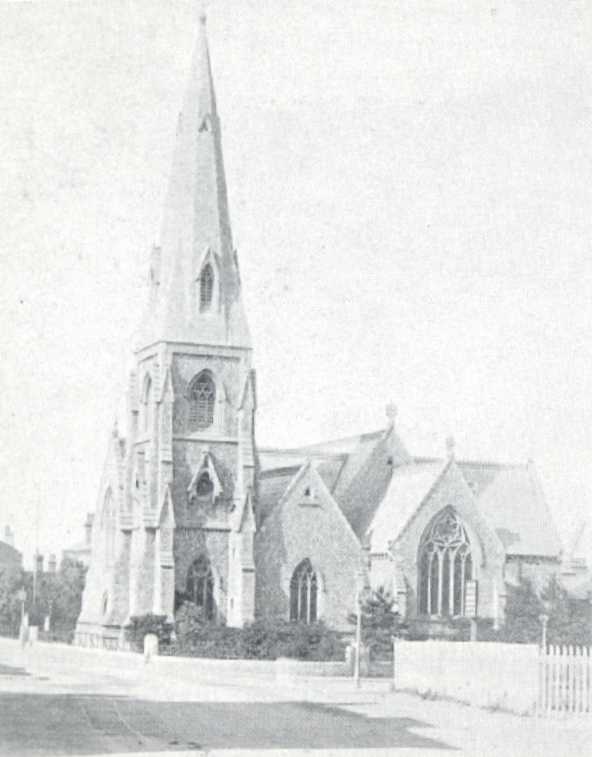
St John was one of the four great
urban churches erected in Suffolk during the course of
the 19th century. The others were Ipswich St Mary le
Tower, Felixstowe St John the Baptist and Bury St John.
The architect was J.L. Clemence, who shoe-horned this
North London-style Anglo-catholic cruciform church on to
the site. The church cost £6000 in 1853, about one and a
half million pounds in today's money. And this didn't
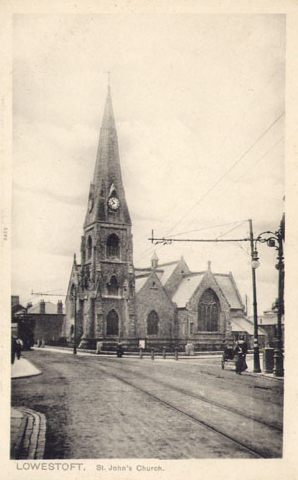
include the spire, which was added in the 1860s. The
tower fitted neatly on the east side of the north
transept, and the top of its spire was the tallest point
in Lowestoft. The interior must have been splendid; the
windows were filled with glass from many of the major
19th century workshops. 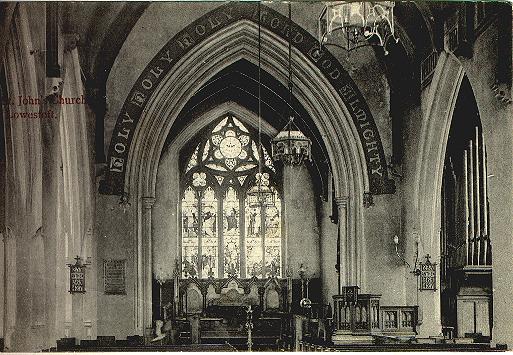
Interestingly, all four great 19th
Century Suffolk churches were built of different
materials in slightly different styles, and the choice of
Kentish Rag and Caen stone for this church may not have
been wise, considering its proximity to the winter storms
of the North Sea. A structural survey in 1964 found
considerable weather damage, and when, in 1973, the time
came for two of the Lowestoft town centre churches to be
declared redundant, this one was easy prey, despite it
being much grander and a more significant part of the
townscape than Christ Church or St Peter.
Some of the damage was caused by the great east coast
floods of 1953, the salt water eating high into the
interior superstructure. As is always the case, it was
hoped that an alternative use could be found. But
Victorian architecture was deeply unfashionable in the
1970s, and redundancy legislation said that, if a church
wasn't important for historical or architectural reasons,
a new use had to be found within three years. This didn't
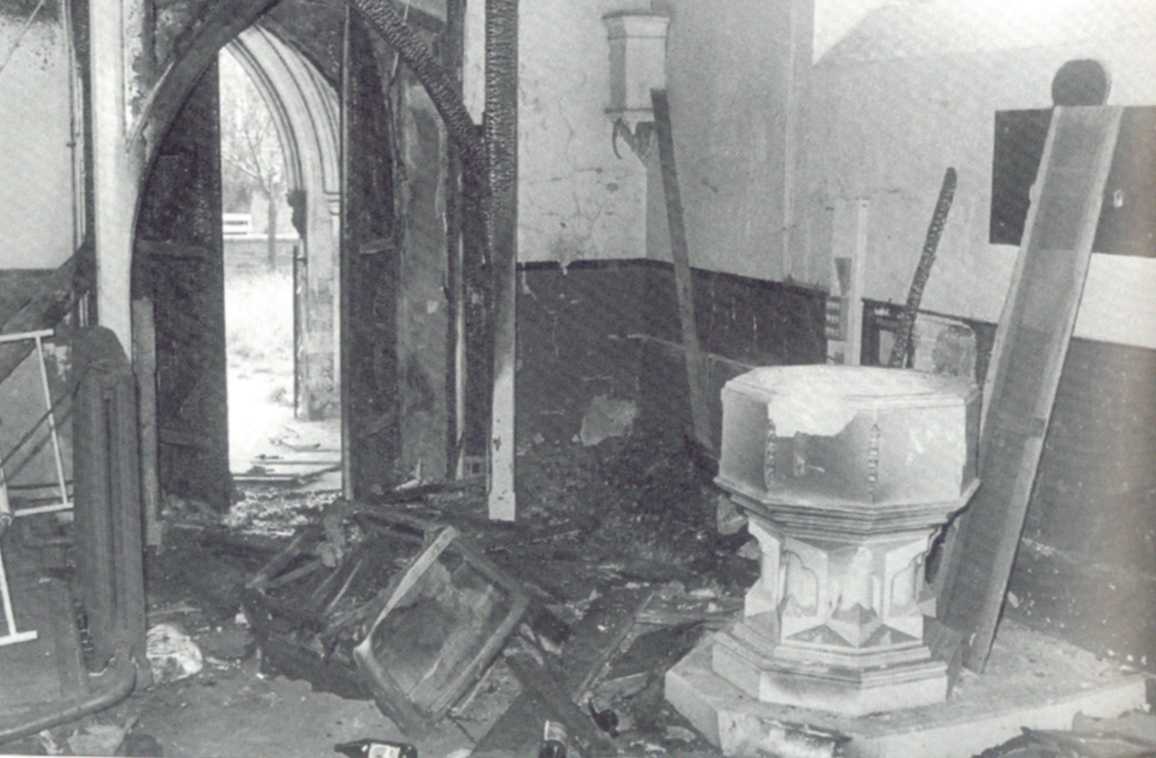
happen, and the church became prey to vandals and
arsonists. Almost all the furnishings were destroyed in
the period between redundancy and demolition. All that
was saved were the altar rails, taken to St Andrew Roman
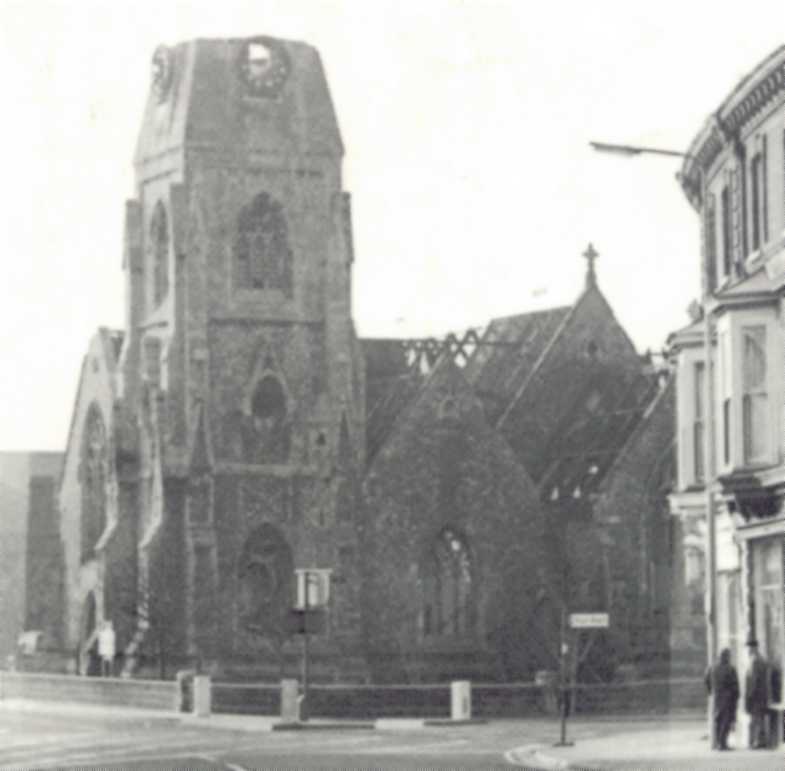
Hill up the road. St John was gutted by fire in 1977, and
after that there was no way back for it. By 1978 the
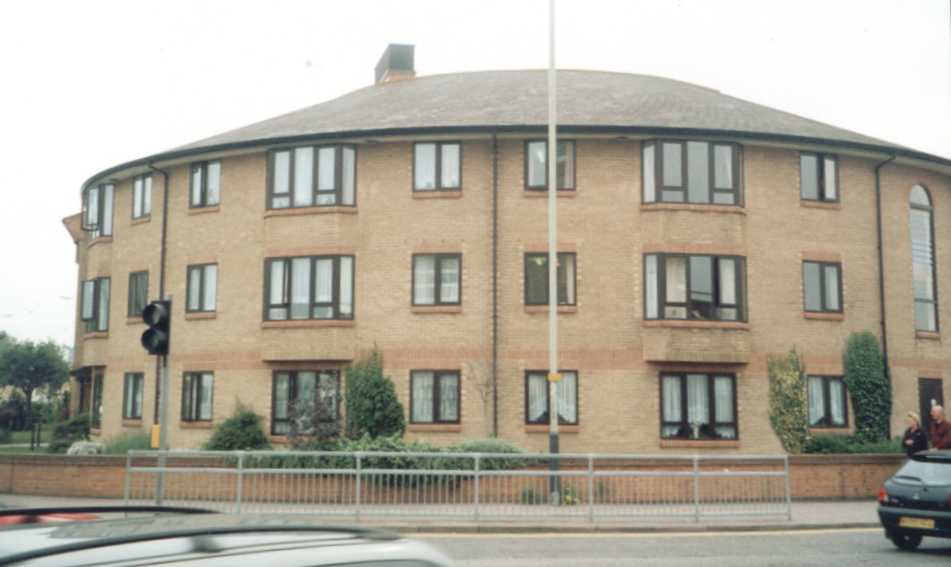
church was a ruin. Full-scale demolition followed soon
after, and a block of flats called Levington House was
built on the site. The photograph of it at the bottom was
taken from roughly the same spot as the photographs at
the top of the page. St John's parish was subsumed into
that of neighbouring Kirkley.
Hardly a single trace of this church survives. If St John
were declared redundant today, there is no doubt that it
would be considered important enough to be saved. Not
only was it architecturally significant, but its place in
the Lowestoft townscape was central. There is a sense in
which Lowestoft had grown around St John, and its loss
left a hole. Interestingly, the redundant churches
legislation which saw its demolition was applied to only
one other church in Suffolk, across the river at
Lowestoft St Peter. It is not unreasonable to notice that
both churches were in the Diocese of Norwich, whereas the
great majority of Suffolk churches are in the Diocese of
St Edmundsbury and Ipswich.
One of the former members of the congregation here was
the composer Benjamin Britten. As a child, he accompanied
his mother from their home at Kirkley, a mile or so off.
She was the organist, and so it seems likely that the
young Britten played the organ here himself. After
closure, the organ was rescued and restored. It was
reinstalled in 1979 at St Andrew, Gorleston, a few miles
over the Norfolk border. This and the altar rails now at
Roman Hill are, incredibly, the solitary survivals of a
vast building that served its community for well over a
century.
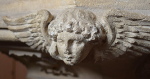
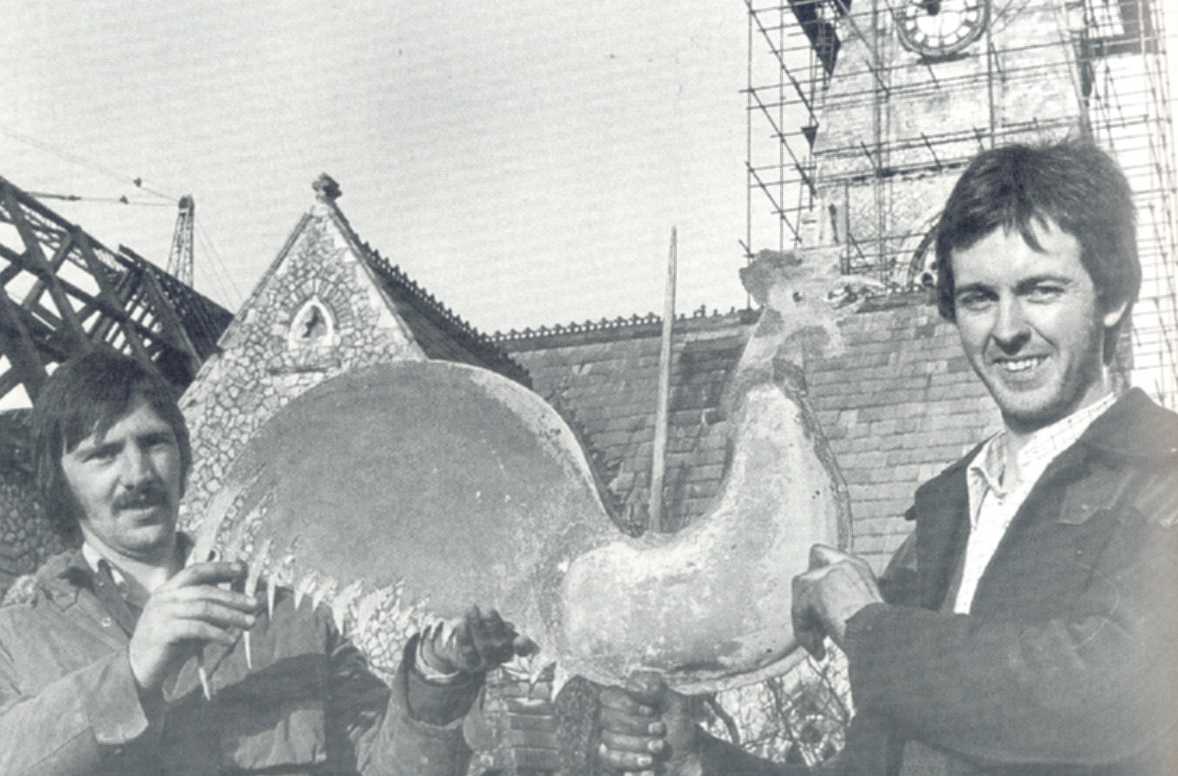
Jack Rose's fine book Changing Lowestoft features
several photographs of St John being demolished in 1978.
One is at the top, and two others, copyright of the
Eastern Daily Press, are below. During demolition, bits
of the church were sold off to interested spectators and
collectors. I wonder where that cockerel is now?
|
|
|