St Peter, Nowton

www.suffolkchurches.co.uk - a journey through the churches of Suffolk
|
St Peter, Nowton |
|
|
||
www.suffolkchurches.co.uk - a journey through the churches of Suffolk |
||
Follow these journeys as they happen at Last Of England Twitter.
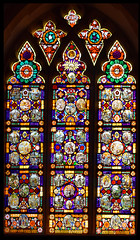
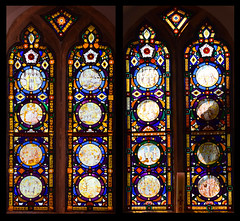
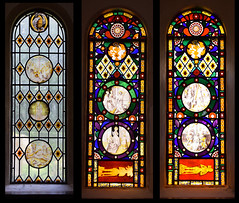
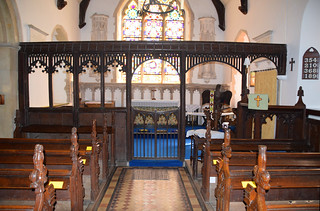
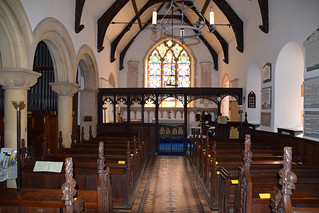
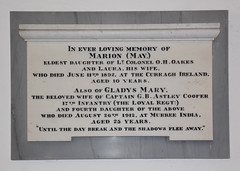
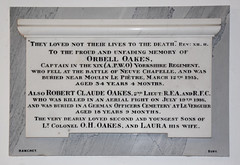
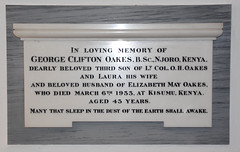
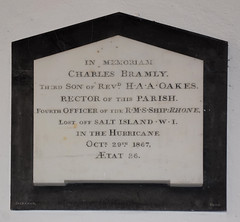
Stepping inside, this is a pleasant, shipshape little church. All around are memorials to the Oakes family in the 19th and 20th Centuries, but it probably won't be them that catches your eye, because Nowton is home to one of the largest and best collection of continental glass in England. Not far from Nowton is Rushbrooke, which in the early 19th Century was the home of the eccentric Colonel Rushbrooke, an avid antiquarian and carpenter who I am afraid was not above the odd spot of forgery. He refurnished Rushbrooke church in the manner of the Cambridge college chapel of his youth, giving it a Henry VIII royal arms into the bargain. Items that he collected can be found in several churches in the eastern counties, for Colonel Rushbrooke spent many happy months in the first decade of the 19th century trawling around the Low Countries and buying up wooden panels and painted glass from monasteries. Many of these monasteries had been closed and ruined in the aftermath of the French Revolution and the following Napoleonic Wars, and their treasures were easily acquired for the right price. At this time, Orbell Ray Oakes was struggling with a way to make Nowton church into a more fitting and beautiful last resting place for his wife. His solution was to purchase perhaps as many as eighty continental panels from Rushbrooke. They were installed between about 1816 and 1820 by the Norwich stained glass artist Samuel Yarington, who was an expert in these matters, working with the Norwich antiquities dealer Christopher Hampp to supply and install continental glass, mostly depicting scriptural and allegorical subjects, to English churches, mainly in the Norwich area. In those days before the great revival of church art later in the century, most English churches were very plain, especially in puritan East Anglia, and in any case coloured glass of English manufacture was not easily come by. The installation of panels of continental glass would be an easy solution, and even a few panels would be an adornment to a simple church. The Nowton scheme, of course, goes much further than this. The panels are to be found in every window except the west window. The panels in the east window are set in nine groups of five, the larger panel in the centre of each group and four smaller panels orbiting around it in a sea of Yarington's patterned glass. There is no obvious sequential order or theological structure, and so it must be assumed that Oakes' intention was purely decorative, to make beautiful his wife's last resting place. The panels were reordered on two occasions later in the century as Nowton church was restored and extended, but the original configuration of the east window in particular was not altered much. There are slightly odd panels depicting knights on brasses by John Sell Cotman set at the base of someof the aisle windows. When the glass was restored in 1970, some panels from the demolished Dagnams Hall in Essex were added at the bottom of the east window to replace glass of Yarington's that had perished. Click on the images below to go to photographs of individual glass panels in that part of Nowton church.
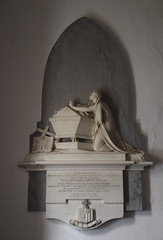
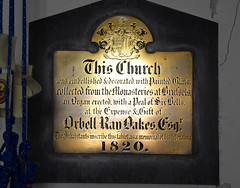
At the west end of the south aisle is the elegant memorial to Elizabeth Oakes by John Bacon Jr. It shows her praying against an angled tombchest on the other side of which are a cross and an open book reading Thy Will Be Done. Under the tower, a brass plaque tells us that this church was embellished & decorated with painted glass collected from the Monasteries at Brussels, an Organ erected with a Peal of Six Bells, at the Expense & Gift of Orbell Ray Oakes Esq. The inhabitants inscribe this tablet as a memorial of his liberality, 1820.
|
Simon Knott, August 2017
Follow these journeys as they happen at Last Of England Twitter.
|
||||||||||||||||||||||||||||||||||||||||||||||||||||||