| |
|
 |
|
East Anglia, and Suffolk in
particular, has so many treasures of the
Perpendicular period that the little
jewels of the earlier Decorated stand out
as being of
more than usual interest. And there is
more to this difference than mere
architecture. It seems to have an effect
upon the way the buildings are kept.
Perpendicular lends itself to neatness
and order; there's something about those
big windows that makes people want to
tidy up and polish the woodwork. Not that
Decorated buildings are necessarily
untidy, of course, its just that they
seem so much less sterile, more organic
and in touch with their ancient roots.
And perhaps a bit dustier too. Raydon,
like Cotton in mid-Suffolk and the
chancel of the nearby Essex church of
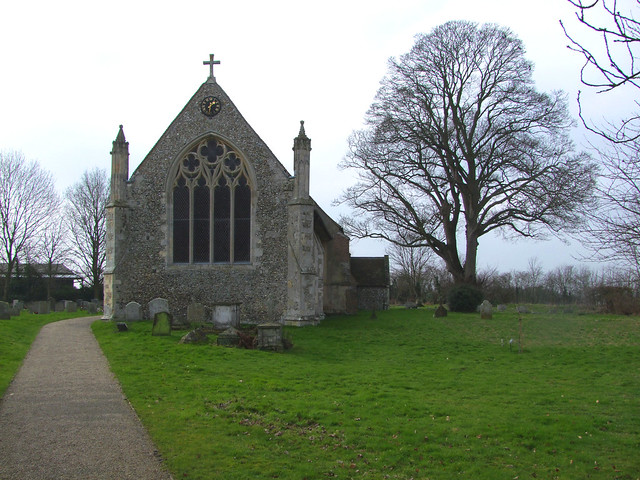
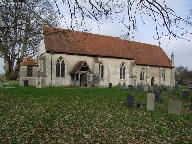
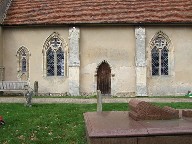
Lawford, is a perfect example of this. The tower herecollapsed in
the 17th century, probably during the
Commonwealth, and possibly during the
great storm of September 1658, when a
couple of other Suffolk steeples came
down. It has been replaced by a little
bell turret, but apart from this the
church is all of an early 13th century
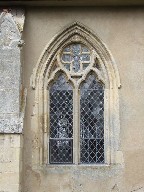
piece, its Decorated tracery second only
to that at Cotton, I think, in all
Suffolk. Like Cotton, Raydon has not been
touched up too much. The Victorians reset
the glorious piscinas and window
stonework in their original places. This
is especially important here, for, as the
church guide records, a book of hours in
the University Library at Cambridge was
originally prepared for Alice de Reydon,
daughter of the Lord of the manor here in
the late 13th and early 14th centuries.
The illustrations, incredibly, are set in
frames which echo the contemporary
tracery in the windows and piscinas here.
|
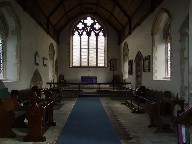
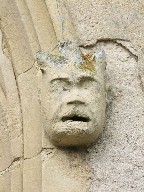
The outstanding details of
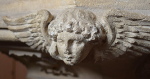
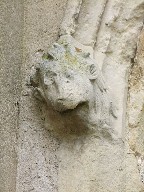
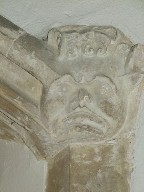
the exterior are the carvings in headstops and on
pinnacles; dragons, lions and wildmen look down
disapprovingly. Stepping through the porch past a
fine surviving holy water stoup you step into a
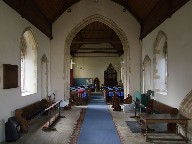
church that underwent a particularly sensitive
restoration in 1883. This produced the pleasant
furnishings and floors, but notably and
mercifully did not install any stained glass, so
the survivals are all medieval, and the church is
enfolded in white light - again, as at Cotton.
Everything is
pretty, and the window tracery has a
delicacy about it that I'd be reluctant
to touch, for fear of breaking. The
chancel is uncluttered, the whole piece
deceptively full of space and light. In
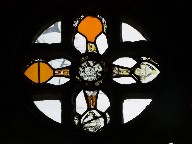
the south side of the sanctuary there is
a double piscina and window with
surviving 14th Century glass in the upper
tracery. The simple woodwork of the 1880s
adds to the ambience, and there are low
side windows on both sides of the
chancel.
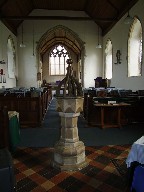
The font is a curiosity. Mortlock thought
it might have been part of the 1880s
restoration, but it is so out of keeping
that I think the church guide is probably
right in placing it as contemporary with
its 18th century font cover - they look
made for each other. |
|
 |
|
|
|