St George, South Elmham St Cross

www.suffolkchurches.co.uk - a journey through the churches of Suffolk
|
St George, South Elmham St Cross |
|
|
||
www.suffolkchurches.co.uk - a journey through the churches of Suffolk |
||


Follow these journeys as they happen at Last Of England Twitter.
| Not far from the Norfolk border
and tucked in the hills which roll down to the Waveney,
St Cross is the most northerly of the Saints and is
unusual among them in that it is a rather pretty place.
The River Beck has cut down into a sweet valley, and St
George sits across a meadow. there is a footpath to the
church marked on the Ordnance Survey map which crosses a
narrow bridge, although I must say it did not look at all
accessible on my most recent visit in February 2022.
Otherwise, there is a driveway to some houses which also
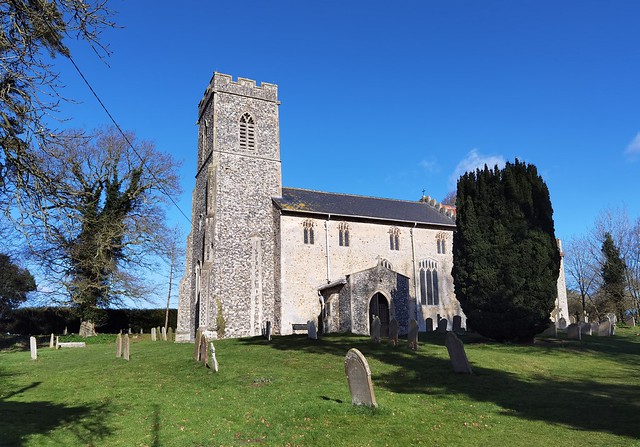
touches the churchyard. The south side of the church is a
grand, austere sight, seeming remarkably tall, the
clerestory somewhat cut off by the lack of an aisle. The
tower is a bold one of the 14th Century, and the
clerestory dates from the renewal of the roof a century
later. The overall impression is of a fat, comfortable,
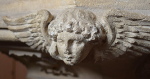
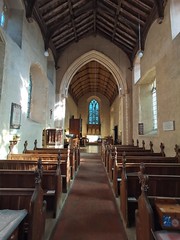
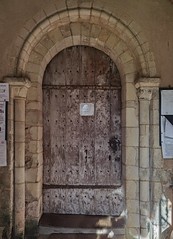
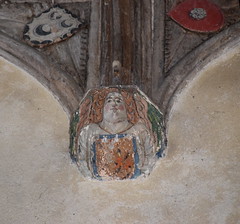
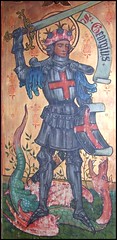
sleepy building at peace with itself on its slope. Among the modern headstones to the north of the church is one to the Canadian poet and writer Elizabeth Smart, who spent her last years in this village. Her By Grand Central Station I Sat Down and Wept, a thinly disguised account of her obsessive love affair with the poet George Barker, became one of the great cult classic novels of the 1960s, and is surpassed only by Shelagh Delaney's A Taste of Honey as a source of inspiration for lyrics by the 1980s cult pop group The Smiths. As a result, this quiet graveyard has become an unlikely place of pilgrimage. As often in the Saints you enter the church through a Norman south doorway, suggesting the true age of the building before the centuries went to work on it. You step into a somewhat austere nave. The interior has a completely different character to the other churches of the Saints. Where they are simple, homely and intimate here is a grand space designed for ritualist liturgy, and the sober Kempe glass adds to thus feeling of seriousness. As at St Michael a few miles off, there is a reredos which suggests an Anglo-catholic enthusiasm in the early 20th Century, with St George and the Blessed Virgin flanking a Lamb and Flag with the words Ecce Agnus Dei qui tollis peccator mundi ('Behold the Lamb of God which takes away the sins of the world'). And yet it is not entirely sombre, for a pretty pipe organ attempts a note of jollity, and the 15th century font recalls late medieval splendour, as do the oddly repainted angels holding up the roof. In the corners of the nave are painted faces, presumably from the 19th Century restoration. The parish includes South Elmham Hall, once the country retreat of the Bishops of Norwich. In its grounds are the ruins popularly called South Elmham Minster, a haunting place half a mile out in the woods, and most likely the former Bishop's chapel. Simon Knott, February 2022 You can also read a general introduction to the churches of the Saints. Follow these journeys as they happen at Last Of England Twitter. |







|
||||||||||||||||||||||||||||||||||||||||||||||||||||||