| |
|
 |
|
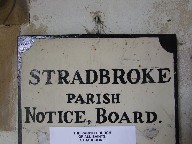
Stradbroke
is perhaps the least well-known of
Suffolk's small towns. But it has a busy,
independent air, with its shops, school,
library and leisure centre. It reminds me
of places of a similar size in France.
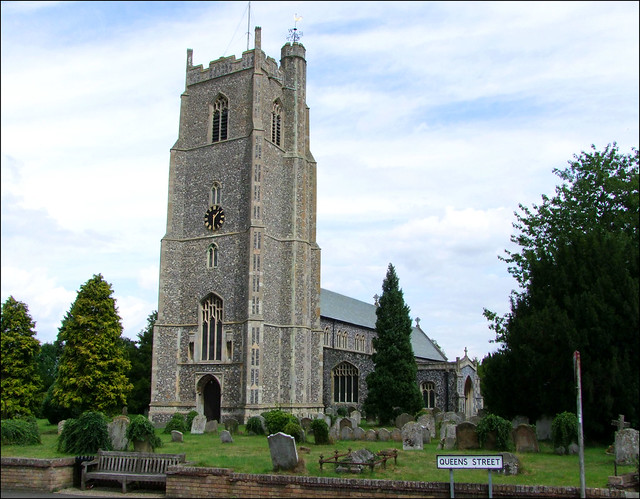
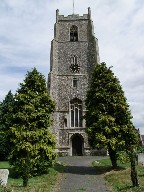
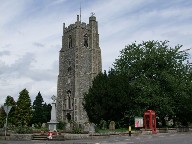
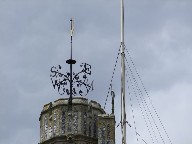
The church is in the centre of town, a
large, imposing building. The 15th
century tower, with its raised stair
turret, is visible from miles away.
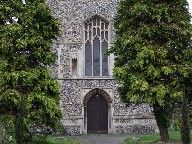
Niches flank the west window, other
windows build via a bell window to high
battlements. It is one of Suffolk's
biggest towers, probably because this was
the parish of the De La Poles, now
sleeping peacefully at Wingfield. Simon Cotton
found a bequest for a new bell in 1428,
which usually followed hot on the heels
of a new tower, so is probably a good
date. All Saints is open every
day, and you get the impression that
people wandering around are just as
likely to be locals availing themselves
of a spot of spiritual refreshment as
visiting pilgrims and strangers, which is
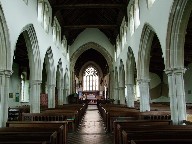
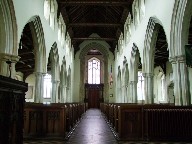
nice. It is a most welcoming interior.
|
The vicar in the
second half of the 19th century was the
formidable J.C. Ryle, the famous protestant
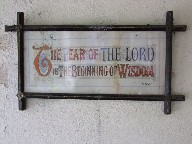
evangelical. He had an enthusiasm for plastering
any available space with quotations from the
Bible. His are the near- Soviet era banner
slogans at Helmingham, designed to keep any
Tractarian tendency of the Tollemaches in its
place. Here, his work is rather more subtle and
aesthetically quiet, on the chancel arch and
roofbeams. They were painted as part of a major
restoration of the 1870s. The architect was R.M.
Phipson,
fresh from his complete rebuilding of Ipswich St Mary le Tower; this church is on a
similar scale, although the exterior is pretty
much intact, apart from a thorough refurbishment.
Below the tower,
there is a dramatic picture of the interior
during this restoration, a reminder of just how
drastic some of these makeovers were. Ryle and
Phipson reduced All Saints to a gaping shell.
Consequently, not much survives of the medieval
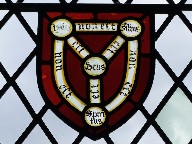
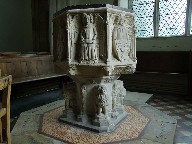
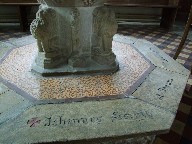
liturgical integrity, except the font, which was considerably
recut but still retains its dedicatory
inscription,
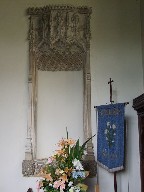
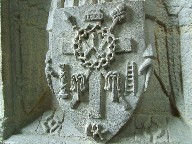
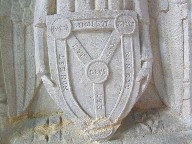
and an amazing niche in the sanctuary. Mortlock feels it was
probably an Easter
sepulchre,
but I don't see why it can't just have been a
niche.
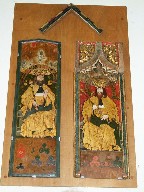
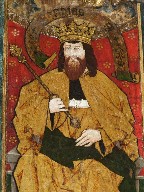
Another medieval
survival is a pair of rood screen panels in the
chancel. They may not have come from this church
originally: they depict two Old Testament Kings,
of whom Ryle would approved, and may have been
purchased and installed here as part of the
restoration. They are, not inappropriately, very
heavily restored themselves. The Clayton &
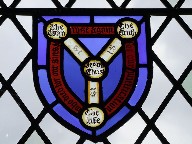
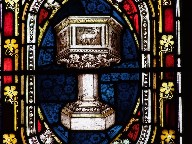
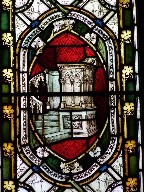
Bell glass in the east window was installed at
Ryle's behest, depicting a pulpit and a lectern
alongside a font as a reminder to the Stradbroke
faithful that the Word was at least as important
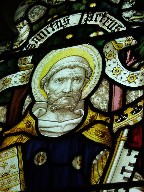
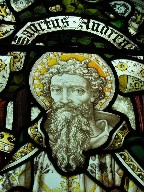
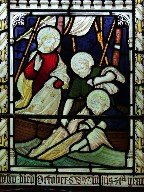
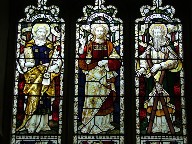
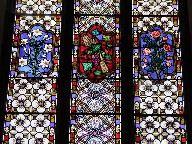
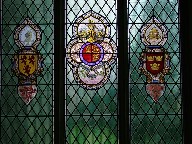
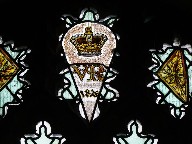
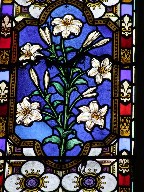
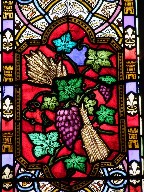
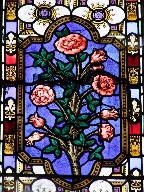
as the sacraments, if not more so. The glass at
the west end is better, I think, including a
memorial window to Queen Victoria and some
beautiful depictions of roses, lilies, wheat and
grapes by the O'Connor Brothers beneath the
tower.
Other points of
interest include a large number of ledger stones
at the west end of the nave. One is to two
parents, who both died at the age of 25, leaving
two infants too young to be sensible of their
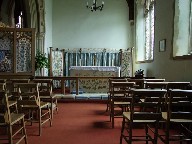
loss. The altar frontal and hangings in the
south aisle chapel, beautiful designs of wild
flowers apparently worked by a one-armed curate,
are a delightful contrast with the stern
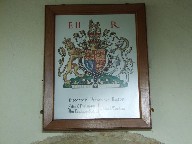
puritanism of J.C. Ryle's chancel. Stradbroke is one of a
handful of churches in East Anglia to have a
royal arms to the current monarch.
| Stradbroke's
most famous son was the ruthless
opportunist Robert Grosseteste, Bishop of
Lincoln in the 13th century. He was
lionised after the Reformation for,
supposedly, standing up to the Pope; in
fact, he aligned his diocese with the
Barons rather than the King, and thus
creamed off money that would have gone to
Rome via the Crown. He became fabulously
rich, as did his crony Simon De Montford,
who led the landed nobles against Henry
III in the Barons' War. Barmy old Arthur
Mee, in his The King's England, treats
Grosseteste as some sort of all-round
Great Englishman and proto-Protestant
hero. The church that Grosseteste
knew, and was baptised in, was not this
one, but was probably on the same site.
In the 1880s, J. C. Ryle left here to
become first Anglican Bishop of
Liverpool, but the mark of his Muscular
sleeves-rolled-up Christianity survives
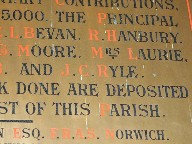
here. Also does his name on a brass
plaque beneath the tower, noting him as
one of the benefactors of the
restoration.
|
|
 |
|
|
|