| |
|
I wonder how many times I
have visited this church's more famous neighbour
at Thornham Parva since last coming here? And
yet, I have always thought of it fondly. I
remember my first visit here in the 1990s, being
surprised and pleased to see a sign down at the
roadside telling me that the church was open. At
the time, I had visited several hundred Suffolk
churches, and although I had found most of them
open, this was the first time I'd come across a
church openly advertising the fact. Nowadays,
such signs are commonplace, but coming back here
in September 2018 I was happy to note that
Thornham Magna still has its sign out by the
road.
St Mary Magdalene's open welcome, and its high
quality 19th Century restoration, are perhaps
both symptoms of the philanthropy and generosity
of the Henniker family, of nearby Thornham Hall.
This is the Henniker church. If you walk
westwards of the tower, you will see Thornham
Hall over the fence, across a field. You will
also find yourself standing among the Henniker
graves, which are as understated and restrained
as the Hall itself.
Anyone who knows this part of Suffolk will surely
love it, a landscape of wooded lanes and gently
rolling fields. And the church gets a good number
of visitors, for the popular Thornham Walks wind
in the woods beyond the church, and there is a
good pub down in the village.
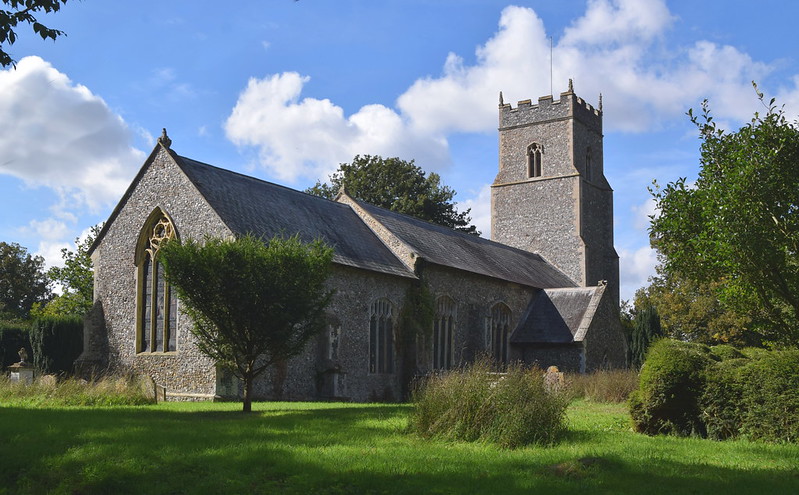
The church is attractively set above the lane on
a cushion of green and brown, although the 14th
century tower is rather forbidding, not least
because of the flat effect of the east wall
caused by the buttresses being flush with it.
There is something similar at Rendlesham. The
late medieval porch is elaborate, with three
niches which would have contained a rood group
before the Anglican reformers removed them only a
few decades later in the middle of the 16th
Century. Incidentally, the odd way in which the
porch abuts the window to the east of it might
suggest that a rebuilding was planned, but the
Reformation intervened.
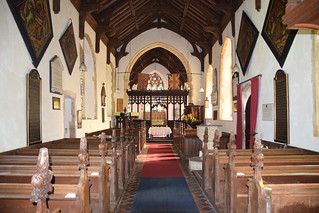
You enter what is inevitably a rather dark
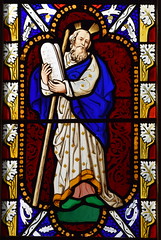
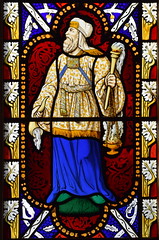
church, narrow and aisleless, the few windows
filled with a range of coloured glass. The gloved
hand of lukewarm ritualism fell heavily here in
the 19th century thanks to the Henniker family
wealth, and consequently not much that is
medieval survived. This church has none of the
rustic medieval charm of its neighbour at
Thornham Parva.
But in any case you come here for the Victorian
era, to see how a landed country family in that
period of renewed confidence and triumphalism
took its parish church to task and remembered
itself in death, for the Hennikers have their
memorials here, and what a contrast they are to
the triumphalism of the Tollemaches at Helmingham
or the Poleys at Boxted. here, there is a feeling
of understatement. The most memorable and
striking on a first visit is probably that to
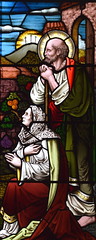
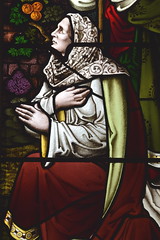
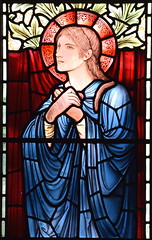
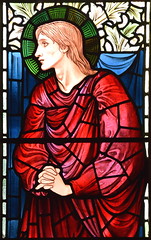
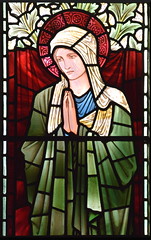
Edward Henniker, who died in 1902. This is the
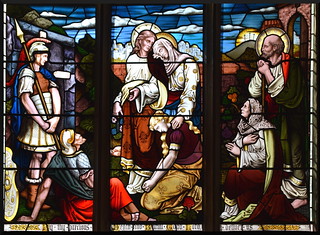
window in the south-west corner of the nave, with
figures by Edward Burne-Jones reused by Morris
& Co a few years after the artist's death. A
gorgeous St Mary Magdalene, a mournful St John
and the rather sombre Blessed Virgin stand as
they would have done at the foot of the cross.
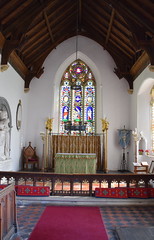
The big restoration had
happened here in the 1850s, rather early for
Suffolk and consequently the patron and his
workmen had a fairly free hand. The elegant,
well-proportioned screen, in a typically bubbly
late medieval East Anglian style, was made by the
Ipswich carver Henry Ringham for a church in
Surrey. It was exhibited in the Great Exhibition
of 1851, but never seems to have been installed
in Surrey. The Hennikers bought it in 1856 and
had it installed here, where it looks very well.
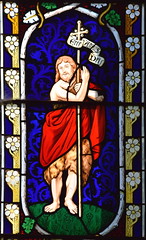
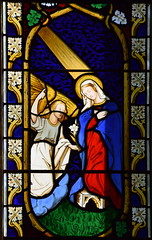
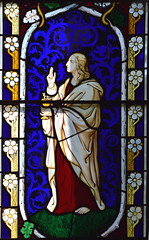
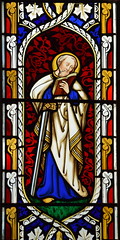
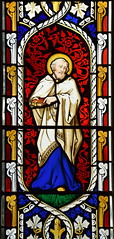
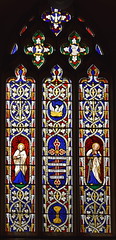
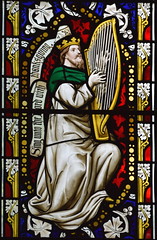
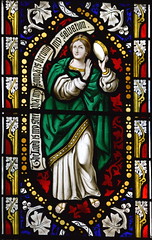
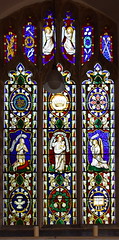
The glass on the north side of the nave by
William Miller was installed through the 1850s in
memory of members of the Henniker family.
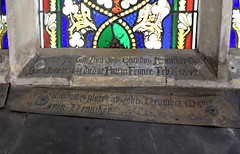
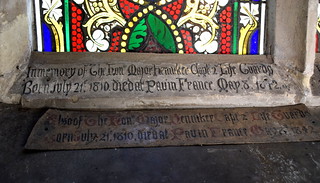
Inscriptions were carved into the sill below each
window, but a rather unfortunate error in the
date of one (the inscription below the central
light of the middle window has the infant John
Chandos Henniker Major being born in 1844 and
dying in 1842) meant that the inscriptions were
soon covered by painted plate metal replacements.
Today, these lie on the sill below the original
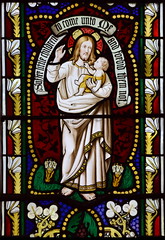
inscriptions, so you can see both. The
unfortunate child, who had actually been born in
1841, is shown in the light above being held in
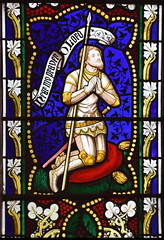
the arms of Christ. In the left hand light, his
father Major Henniker kneels in 14th Century
uniform holding a spear. He died at Pau in the
Pyrenees a few months after the death of his son.
The mawkish scene on the
other side of the nave, depicting the three women
at the tomb of Christ, is typical work of the
1880s by WG Taylor, but the other glass up in the
chancel is also by William Miller, also of the
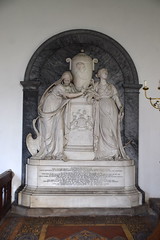
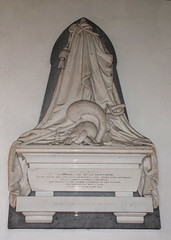
1850s. Up here in the sanctuary is the Hennikers'
one attempt at full-blown triumphalism, the
memorial to John Henniker Major. It is by Joseph
Kendrick. Faith clasps the urn looking downcast,
a swan or cormorant peeping from behind her,
while Hope looks up, resting against her anchor,
a characterful face at once sorrowful and
earnest.
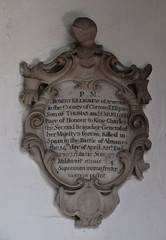
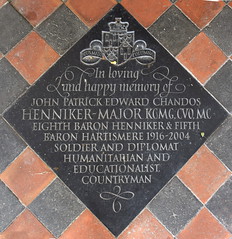
The Henniker memorials are an interesting history
of the colonial adventures of an established
landed family. One was killed in Spain, in
the Battle of Almanza, while another served
in the Egyptian Campaign... and throughout the
South African War. The memorial to the Major
Henniker commemorated in the window is by William
Woodington, who, Sam Mortlock reminds us, was
also responsible for the bronze reliefs around
the base of Nelson's Column. There are seven
Henniker hatchments, an unusually large number
even for Suffolk, which has more than any other
county apart from Kent.
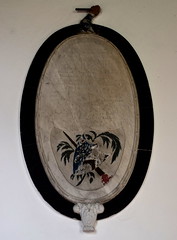
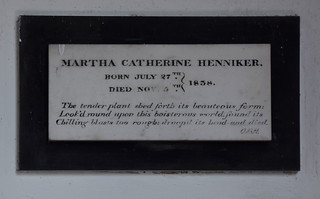
But my favourite memorial of all, I think, is the
simple one to Martha Catherine Henniker, who was
born in July 1838 and died just three months
later. The tender plant shed forth its
beauteous form, look'd round upon this boisterous
world, found its chilling blasts too rough,
droop'd its head and died. Isn't that
lovely? I wonder if it can have been a comfort.
It is signed CRH, perhaps her mother or father.
Leaving, you can't help thinking that perhaps the
grieving figures in the Burne-Jones window
reflect something of this sadness in Martha
Catherine Henniker's inscription.
|
|
|