St Mary, Uggeshall

www.suffolkchurches.co.uk - a journey through the churches of Suffolk
|
St Mary, Uggeshall |
|
|
||
www.suffolkchurches.co.uk - a journey through the churches of Suffolk |
||

Follow these journeys as they happen at Last Of England Twitter.
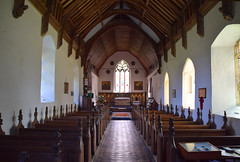
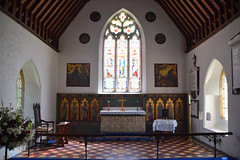
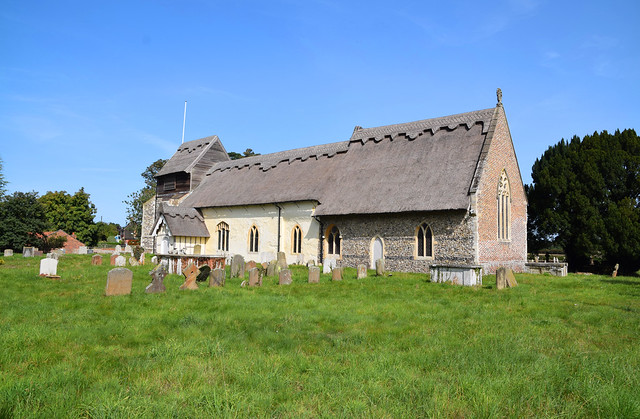
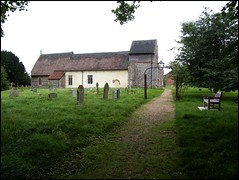
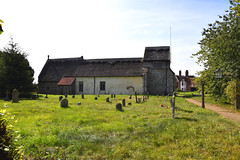
St Mary is a little church in one of the tiny villages north-east of Halesworth. Even in Suffolk, few will have heard of it. Half a dozen houses edge the churchyard, but that's about all there is to the village. And yet on a summer day there's nowhere like these little lanes for aimless cycling and church visiting. It's a special place. The church itself is
rather squat, with an unusual roofline, the
chancel rising higher than the nave. The roof is a
reminder of the difference that building materials can
make, for just imagine St Mary without its beautiful
thatched roof. A 19th century clapboard belfry surmounts
the base of a tower which was planned and paid for but
never built, because the Reformation happened first. The
Norman arch to the blocked north door is still visible.
The softness, the combination of thatch, flint, whitewash
and wood make this, for me, one of the loveliest
buildings in north-east Suffolk. There's nothing else
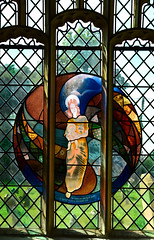
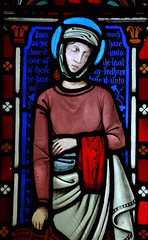
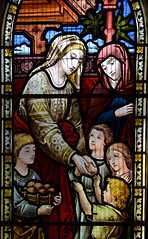
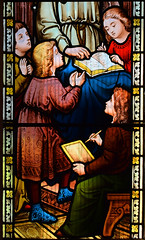
quite like it. An even finer window sits at the west end of the south wall. It is a Madonna and child, surrounded by imagery from the parish. It is by Rachel Thomas, a Somerset artist. It was installed in 2001, and so is one of the first examples of 21st century stained glass work.
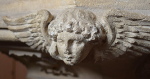
Recent repairs have exposed a fragment of wallpainting facing the south entrance. It is probably part of a St Christopher. Above it, a wingless angel gazes down mournfully, looking a bit fed up with the heating plug and socket that hems him in. In the walls of the nave, some image niches were uncovered at the same time. There are two
survivals of the medieval life of this church that might
easily be missed. The first is above where the nave
becomes the chancel. You can still make out the colours
of the canopy of honour to the rood. There are several
others of these surviving in Suffolk, but none in such a
little church. The second is outside at the west end,
below where the tower would have been. Here is the
dedicatory inscription to its donors. It says Orate
pro animabus, Joh'is Jewle et Marione ux' ejus
('Pray for (our) souls, John Jewel and his wife Marion').
They were probably a local couple, from the village,
certainly not nobility. The inscription is punctuated by
the symbols of a stonemason. Simon Knott, April 2020 Follow these journeys as they happen at Last Of England Twitter.
Amazon commission helps cover the running costs of this site |