St Mary, Walsham-le-Willows

www.suffolkchurches.co.uk - a journey through the churches of Suffolk
|
St Mary, Walsham-le-Willows |
|
|
||
www.suffolkchurches.co.uk - a journey through the churches of Suffolk |
||


Follow these journeys as they happen at Last Of England Twitter.
The north of
Suffolk has several notably large villages.
Walsham-le-Willows is one, and nearby are Rickinghall,
Botesdale and Stanton. So often in the east of the
county, you cycle for miles through parish after parish,
the village centres fleeting and ephemeral. You are more
conscious of the pattern beneath the plough. Up here,
villages are more substantial, with shops and pubs,
schools and even factories. To all intents and purposes,
the village is the parish.
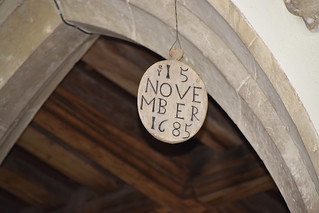
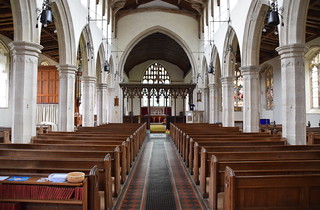
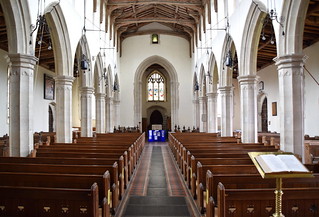
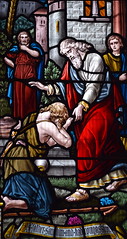
As you might expect, the interior was lavishly restored by the Victorians, and St Mary would not be out of place as a town church in Norwich or Ipswich, but it was a happy restoration, because much that is medieval has survived. Walsham-le-Willows' most famous treasure, however, is not medieval at all. this is the medallion from a maiden's crants, a flower garland, which once hung above it from the south arcade. It remembers Mary Boyce, who, they will still tell you here, died of a broken heart on the 15th November 1685. The garland was a symbol of her virginity. Such things are more common in the West Country than here, but perhaps East Anglia did not have so many virgins.
The greatest medieval
survival at Walsham is the roof. It is unusual in that it
is supported by alternating tie-beams and hammer-beams,
and the original paint is still visible. It must have
been quite something when it was new. The contemporary
screen also survives, restored and regilded
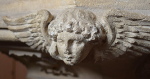
sympathetically. Human and animal faces grin out of
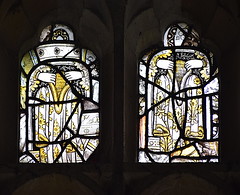
foliage in the spandrels. Most of the medieval glass
which would have colourfully illuminated the roof and the
screen has been lost, but fragments have been collected
into octagonal lozenges in the east window, and there are
angels at the top of the tracery leaning over the
now-lost subjects, as at Salle and on the screen at
Ranworth. They are a tiny part of what must have been a
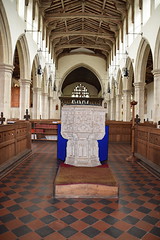
vast scheme in such a large church. The 14th century font
which saw all this come and go remains today, set in a
sea of Victorian tiles, but still calling the children of
the parish to baptism. Simon Knott, August 2019 Follow these journeys as they happen at Last Of England Twitter.
Amazon commission helps cover the running costs of this site |