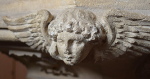
All Saints, Worlington

www.suffolkchurches.co.uk - a journey through the churches of Suffolk
|
All Saints, Worlington |
|
|
||
www.suffolkchurches.co.uk - a journey through the churches of Suffolk |
||

Follow these journeys as they happen at Last Of England Twitter.
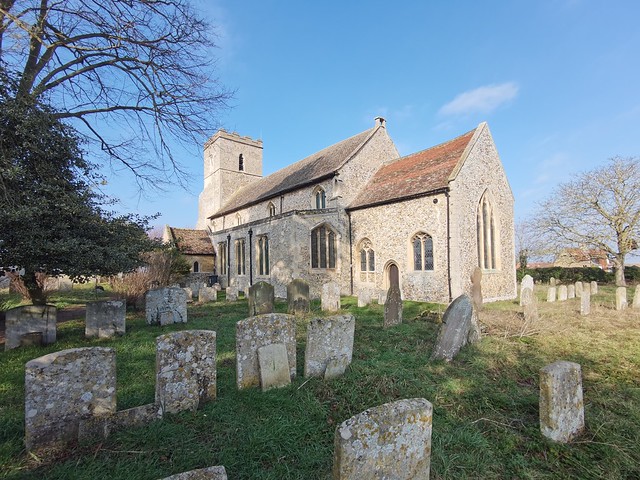
| Worlington sits not far from both
the Cambridgeshire border and the Suffolk town of
Mildenhall, in that intensively agricultural area where
the Fens become the Brecks. Its parish church sits away
from the busy high street at the end of a lane which
eventually peters out in the fields, and the tight little
churchyard feels a secretive place. The current church
dates from when the 13th Century was becoming the 14th,
with an aisle and clerestory added towards the end of the
medieval period. There was a restrained restoration as
late as 1910 leaving the church looking as it does today.
One curiosity is the surviving sanctus bell turret at the
apex of the nave gable. I'm told that the late medieval
bell is in the collection of Moyse's Hall, Bury St
Edmunds. Interestingly, Peter Northeast and Simon Cotton
recorded a bequest of 1515 by Margery Howton of
Mildenhall to the makynge of the broken bell in
Wirlington yf the paryshe do amend it vjs viijd,
which is to say six shillings and eightpence, although it
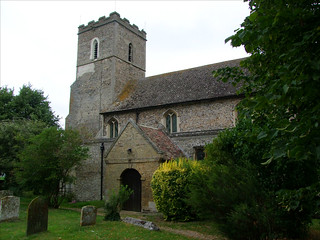
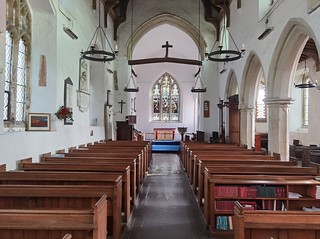
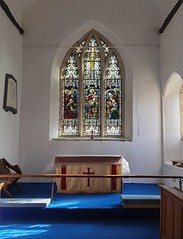
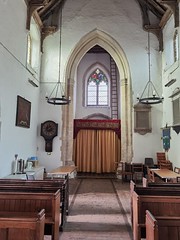
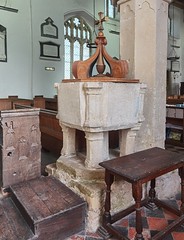
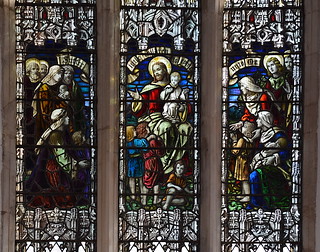
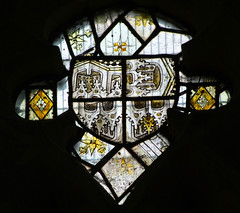
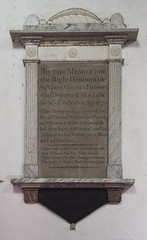
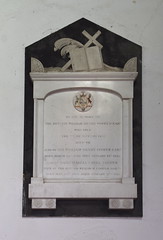
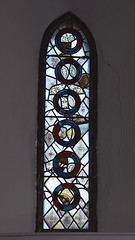
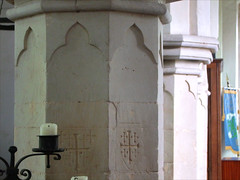
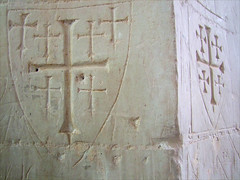
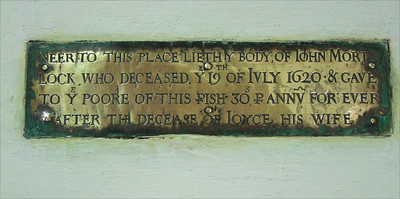
isn't clear which bell is being referred to. You step through the south porch into a calm, seemly interior, obviously loved and well-cared for. The 12th Century font sits against a pillar at the west end of the arcade, the conventional position. Below the capitals, the pillars of the arcade are decorated with pointed head arches as at nearby Lakenheath, and a not inconsiderable amount of old graffiti. The view east is towards early 20th Century glass depicting Christ welcoming the children by John Dudley Forsyth. His work can be found elsewhere in Suffolk not far off at Culford. On the north wall of the nave are three substantial memorials, all from the first three decades of the 19th Century. From two centuries earlier is a brass inscription to John Mortlock, who in 1620 gave to ye poore of this parish 30s per annum for ever after the decease of Joyce his wife. There are scatterings of fragmentary 15th Century glass, some formed into roundels on the north side of the chancel, and there are several fragments of late medieval wall paintings. A floral border peeps from near the blocked rood loft stair exit, while a pinnacle in a window splay was probably part of an image frame. Although the rood screen has gone, the canted rood beam is still in place, topped by a 19th Century cross. Most memorable of all perhaps is the ticking of the parliamentary clock at the west end of the nave, which made sure that 18th Century Worlington kept pace with London. |
Simon Knott, February 2023
Follow these journeys as they happen at Last Of England Twitter.



|
||||||||||||||||||||||||||||||||||||||||||||||||||||||